The Online Mod/ern/ist Archive

archive of original modernist recollections and information .
we are glad to hear from anyone with memories of the time, but we do not rewrite history .

24 Oct 2007

It's the Blue-Beat Craze !


A look at the latest craze to take the record industry by storm.


IT’S THE BLUE-BEAT CRAZE

Norman Jopling – Record Mirror February 15, 1964

The record industry thrives on new crazes and sounds. And at the moment three record companies are thriving on the Blue Beat craze which is just being taken up by the industry in general as a potential money spinner for all concerned


Just for the record, and for those who probably haven’t heard it yet, just what is blue beat?

Well, it’s a strictly Jamaican sound with a pulsating on-beat played on stop chords throbbing mercilessly through the disc. Most of the songs are down-to-earth items that don’t usually deal with love, and the tunes are strictly secondary to the beat.

The craze has been “in” with the Mods since last summer because of the marvellous dance beat and of course has been bought by the West Indians in Britain for many years now.

But it was only when the larger record companies heard of fantastic sales for such blue beat discs as “Madness”, “Carolina” and “Blazing Fire” that they realised it could mean something.

ORIGINS

Anyway, let’s take a look at the small blue beat companies – after all on of the attractions the music had to the Mods was that the music was exclusive to the smaller and virtually unknown labels.

Firstly there’s the Blue Beat label itself. Owned by Melodisc records run by Siggy Jackson this label was formed some two years back. It boasts many of the biggest blue beat artistes including Prince Buster, Derrick Morgan and The Folks Brothers.

“The blue beat rhythm itself was started by Prince Buster” says Siggy. “He had been singing in Kingston for a while, then he invented this new rhythm. His success since has been phenomenal. He has packed halls in Brixton and his “Madness” has sold over 120.000 copies. That’s our best seller that’s top of our own little chart. Other good discs for us are “Carolina” by the Folks Brothers and our new one “Tom Hark Goes Blue Beat”.

Although Buster invented the blue beat rhythm, I invented the name for our label.”

The other two blue beat companies don’t agree about the origins of blue beat. Both Island and R & B say that the rhythm has always been predominant in Jamaican music.

Island records is run by Chris Blackwell, an enterprising young white Jamaican who was fascinated by blue beat and started his own company here well over a year ago. His best seller is “Blazing Fire”, while another good one is “Housewives Choice”. Most of his numbers are recorded in Jamaica, unlike Melodisc who record here. But recently Island have been recording some of their best artistes here including one Millie, who had a disc recently issued by Fontana.

“So far all of our discs have sold well and we haven’t had one flop” Chris told me. “My aim is to see a blue beat disc in the charts – even if it was only at n° 50.”

Chris also owns two more labels. One is Sue, the great US R&B label which Chris bought when he was last in the States. Some of America’s best unissued R&B discs can now be obtained through this label. The other is Black Swan, more of a Calypso type label.

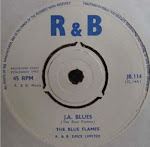
The other record company is R & B, the smallest of the three. Like Island they are selling very well still to the Jamaicans, while Melodisc are selling more to the Mods. Run by Ben Isen who also runs the R & B record shop in Stamford Hill, sales have been going up considerably. One of their top discs is “Orange Street”, an organ instrumental by Georgie Fame & The Blue Flames.

There are smaller companies, the ones who pioneered blue beat. How about the larger ones?

First of all, Decca has put out a disc called “The Blue Beat” by the Beazers. All of the small companies unanimously say “This isn’t blue beat, and if people think it is – it will do us harm”. The record itself is sung by Chris Farlow and backed by Cyril Stapleton. And no one anywhere seems to think it is blue beat. Decca are also reported to be leasing some tracks from Melodisc for release and next week will be recording some genuine blue beat groups to be put out on Decca.


PRIORITY

EMI are issuing two discs in February by Ezz Reco and the Launchers with Boysie Grant and Beverley as vocalists. This is a genuine blue beat group and if the discs are fairly successful EMI will be issuing more. But it is certainly an unprecedented step for a big record company to issue two discs by the same artiste within two weeks!

And so far no word from any other companies. So it looks as if the Blue Beat craze is destined to catch on in a big way with the two biggest record companies giving it top priority.

But once it starts breaking big nationally it looks as if the mods are going to have to find something more exclusive.

Keep your eyes open record companies…

Manchester - Roger Eagle 1985 Interview

Further to the interview conducted by The New Breed which was posted last month, we found this short interview done in 1985 that was published by a small Manchester fanzine “The Cat”.

Very interesting as well.


Spotlight on a DJ : Roger Eagle

Back in ’64 in Manchester, the clued-in dudes would be seen every Saturday sweating the night away at the Twisted Wheel club to the latest American black music supplied by their favourite DJ – Roger Eagle.

Over twenty years on, the Twisted Wheel is no more but Mr. Eagle is back in Manchester spinning R&B every Thursday night (9-12) at his club “The International”.

In this short interview Roger Eagle tries to help us revive those Twisted Wheel days …

How did you come to be DJ-ing at the Twisted Wheel ?

I walked in there one afternoon when it was the “Left Wing Coffee Bar” with a pile of Chuck Berry and Bo Diddley imports on Chess and Checker and this guy asked me if I knew anything about Rhythm’n’Blues.

Naturally I said yes, so he asked me if I wanted to dj.
I’d never DJ-ed before but I thought I’d take a shot at it and that’s how it started.


How did you cope DJ-ing for the first time ?

I didn’t really know what to do, I just put records on and I never used to say much. But the people who used to come down were really fanatical about sounds so if it was a good record they would know what it was within seconds, it was that kind of crowd.

Was you involved with the mod scene at that time ?

I suppose I was the dj the mods would listen to if they were going to clubs because the Wheel was the allnighter scene in Manchester. I wasn’t a mod myself but I thought it was fascinating that English kids were getting into American black music.

We started bringing the artists over and it was amazing to see people such as Howlin’ Wolf, Otis Redding, Rufus Thomas, Muddy Waters etc… getting the same sort of reception that normally only big pop stars got.

The only thing I don’t like about the mod scene is that some people are very narrow in their tastes, we were very broadly based when we started at the Wheel. It gradually narrowed down to Northern Soul which I think was a mistake.

Did you have live bands at the Wheel ?

Yeah, we used to get American artists over to play, people such as Chuck Berry, Screamin’ Jay Hawkins, T-Bone Walker, John Lee Hooker.


Muddy Waters and Howlin’ Wolf didn’t play but they did some live stuff for the local TV station.

We had loads of them down there all the time, Jimmy Reed used to sell out the place.

When Sonny Boy Williamson came over he freaked over English girls wearing mini skirts. He was wandering around looking up all the girls saying ‘Heaven Hath Come Down’.

He was probably the greatest harmonica player of them all, maybe even better than Little Walter, which is saying a lot.

How did you know Guy Stevens ?

We knew each other, we knew what we were doing, he used to send up records.

He came up once with Inez and Charlie Foxx. He gave me a Don & Dewey single ‘Stretchin’ Out’ and he mailed me an album by Frank Frost & the Nighthawks which was out on Sam Phillips ‘Phillips International”.

I used to go to the Scene club in Ham Yard before it was the Scene but I moved up to Manchester when the R&B thing started.

Where did you get your records at the time ?

Mostly I used to get them from American record companies or from a specialist import shop. I used to get records sent from the Stax label, Stan Axton the owner used to send me records.

I used to get records sent from Tamla Motown, Atlantic, Dual, Duke, Sunset, Songbird, Backbeat and all those kind of labels.

Roughly, what would be the Twisted Wheel top ten in 1964 ?

The favourite record of all time at the Wheel was ‘It Keeps Raining’ – Fats Domino. That was probably the most played record, then you would go to something like ‘Walking The Dog’ – Rufus Thomas.
Then you could go to any one of a dozen Muddy Waters records, probably something fairly obvious such as ‘Tiger In Your Tank’. The next on the list would be ‘That’s What I Want To Know’ – James Carr, then one of Bobby Blue Bland’s ‘Turn On Your Lovelight’.

Then would come ‘Amen’ by the Reverend Robinson and ‘Long Distance’ by Garnell Cooper and the Kinfolks which was one the rare unknown ones that we played a lot. You could pick on any one of a dozen records by Booker T & The MG’s, probably one of the more up-tempo ones such as ‘Can’t Be Still’ or something like that. There was always plenty of records from the Stax label in the top ten and also there was quite a lot of Tamla Motown floating around in there as well.

But there was not quite so much Tamla Motown as people like to think. I didn’t play that much Motown or Spector stuff just because it was so widely available and the chart stuff.

I was playing gospel stuff, but after 4 years at the Wheel it was down to that one fast Northern Soul dance beat which I tough was very boring and that’s why I left in mid ’67.


(both photos courtesy of The New Breed)

3 Oct 2007

Changing Faces


The Sunday Times Colour Magazine –August, 2 1964


CHANGING FACES


They have been called the « anti-hoorays ».

« But you can tell us by the way we walk – feet out », said one Mod.
« Rockers are hunched. We hope to stay smart for ever, not shoddy like our parents. »

Photographs by Robert Freeman. Report by Kathleen Halton


« Next year it will be dead. Fellows of 15 and 16 are giving it a bad name : It’s these scooter Mods who live and die in their anoraks. They go down to the coast, hang around and then, there’s trouble. » the speaker is Jack, 18, who works on a building site.

But Denzil (see cover), also 18, says, « You go down to the sea because you get bored. The summer comes around, you keep saying you’re going to do something different – go to Jersey or do a season. You keep saying you’re going to do something about it. Then all of a sudden it’s september again.


« Once you’ve got to 20 you consider yourself a bit old-mannish. If you’re a bit juvenile, you can get away with it. But you know yourselfyou’re getting on, you’re going to be left out of things. » Denzil (above) livesin Streatham where his father is a garage mechanic.

He says things used to be lively in Streatham « till the kids started going up to the West End and getting introduced to the pills, getting edgy and argumentative. There’s a lot of lying when you get ‘blocked’ – the number of girls you get in a week, the price of your suit. But the drug kick is dying out a bit. »


« Most of these real beaty girls are only looking to boys for companionship. They’re sexually dumb. »
says Eric Burdon (one of the Animals). A boy may like a girl he meets at the Scene club in Soho. But she comes from Hounslow and he comes from Purley so the make their own way home.
Most Mods live with their families –« I don’t tell my parents I go up to the West End, » said one girl. « I mean, would you let your daughter do it ? » « Not very many go steady these days, » says Ted, who is a ‘leader’.

« That’s mostly Rockers. There’s nothing else for them to do, no dancing. Very few girls are worth taking out more than once. » Denzil says « The fellow’s got to like a girl a lot to have her around with his friends. Of course you get the all-night parties. Jumping around to a gramophone. Then all of sudden you get tired, and go to sleep. »


« American styles are out, like Madras cotton jackets and Seven and Sixes – that’s the name we give to baby Mods who’re still wearing these 7s 6d. T Shirts from Woolworths. » Denzil says it’s suits now, and basket shoes.
You need £ 15 a week to be a leader – most Mods make between £ 8 and £ 10 a week and spend about £ 4 on clothes. « It’s pure dress now, » says a ‘stylist’, « no gimmicks. Your handbag has to look expensive inside, it could never be plastic. » « A boy will carry trousers to the dance hall in a polythene bag so they don’t get creased, » says another. « They spend hours on their hair – they don’t use any old blow drier, but one with a hood. »


« The Shake, Block, Bang, Surf – they’re all out. And girls are out for dancing. They don’t let themselves go. So we just dance as a group. » For Mods the pop music and dance TV programme is still Ready Steady Go ; and the club is The Scene. Cathy who comperes the show, says the programme is successful because it doesn’t preach. « We show the kids what’s new – they can pick it up if they like it. » Everybody goes to The Scene (2 gns. A year membership, 1 gn. for girls) because they’ve had groups like The Animals and The Stones and put on rare records from America.


« If you can’t dance you might as well go home. Or you have to dress really smart to make up for it. » Quick changes, like this one outside a Soho club are part of the game. Tuesday is the best night at The Scene. Monday is Mecca night (Hammersmith Palais or the Orchard at Purley), Wednesday for staying in, Thursday for washing your hair – and Friday for nothing special ? Then Saturday night-all night in the West End. « Movies or football ? » says Denzil. « We don’t have time for them, because Sunday’s meant for the Flamingo, or sleeping, and Saturday for shopping. »


« There’s a place for choice Mods left of the band. Rockers wouldn’t dare stand there. » The choice place is at the Orchard Ballroom – which has two bars, ultra-violet lights that play on the dancers, and a blue grotto for sitting out. It costs 3s. to get in -–if you get past the ‘bouncers’ ; they know the trouble-makers.
The ‘choice’ Mods don’t use the term ‘Mod’. « You wouldn’t be pleased to call yourself that, » says Denzil. « Though you might call us stylists, orfaces. » « New faces are being snubbed now, » says Louise, « because the old ones are still in power. By the time it’s the young kids’ turn, something else will be in. »


I don’t really mind about keeping up with the Joneses but when your friends look at you and say, ‘We’ve got a car or a fridge … » Jean (Below) who works as a hairdresser is 19. Her husband Mike is 22. He’s a post office engineer. They live in a small flat in Hammersmith, and collect stones, knives and cheap antiques. Both are Mods but they look forward to staying at home at least one night a week. Mike wears carpet slippers after work. Both of them are saving up for things. Most Mods are more worried about having a good time than a good job.


Say you get something unusual like going to the coast in a lorry, you look forward to it. »

Or a shuffle boat party on the Thames, or sitting around on the beach at Margate with your transistor. « Everybody wants to go abroad, » says Denzil. « Some get ‘blocked’ and say they’ve been washed up in Switzerland or Casablanca. But you know it’s not true. » « Some boys put up pylons in the summer – you get a good tan that way, » says Louise.
A few years ago, when the coffee bars were in, you pretended you were intellectual. Now you just chatter. « We don’t talk politics or religion – we hate attempts to make religion with it. It’s always Rockers on those tele programmes. »


« This Violence is stirred up by the papers. The Mods haven’t time to hate – they are too busy looking at themselves. » The two ‘Mockers’ above wear Rocker-type jackets but made of nylon, not leather ; and Mod hair styles. They don’t fit either side. « But the press built up these gangs, » says Ted. « We’d just walk past the Rockers. » But now, according to one girl, somebody says, ‘Let’s go to Hastings, or Brighton, for violence’. » « My dad’s trying to get me to join the Young Conservatives » says Louise, « but I like this set. They’re nice, and they say what they mean. »

Is Cathy A Mod ?


*

19 Sept 2007

Bowie The Bowie Man


Timothy White speaks to David Bowie about his mod years.


Tell me about adolescence, your early teens.


I had the usual desire to break ties with home and parents, the general anger of youth. I have a half brother brother and a half sister, neither of whom I've ever been particularly close to, because they've never lived at home. I was brought up ostensibly as an only child, and they put in these lightweight appearances.

I lost contact with my stepsister Annette when I was 12 that was the last time I saw her she was quite a lot older than me and went to Egypt to get married.
We've none of us heard a word from her since, and we've tried to trace her.

I was living up in Brixton until I was 11 years old, and that was enough to be very affected by it. It left great, strong images in my mind.
Because the music that was first happening in my early teens was happening in Brixton, it was the place one continually had a relationship with.

All the ska and bluebeat clubs were in Brixton, so one gravitated back there. Also it was one of the few places that played James Brown records, other than two French clubs in town, La Poubelle and Le Kilt.

A friend of mine, Jeff McCormack, who ended up as Warren Peace in the Diamond Dogs band, had the big ska record collection, and it just wasn't worth competing with him, so I went straight into buying Chuck Berry, Little Richard and the blues stuff.

Were white teenagers welcome at the shebeens?

At that time it was cool. If you expressed an interest in the music and got off on what was happening in the clubs, it was a lot easier, I guess, than it is these days. Although I don't know; I haven't been to those clubs in years.

I've hardly been in London in a social, living way for so long that it's almost an alien city to me now which is unfortunate in some respects, but you lose some and gain some.

At the start of your career you spent a lot of time around the legendary Marquee Club, which had weekly R&B nights featuring twin bills like Sonny Boy Williamson and the' Yardbirds. What was that scene like in the early 1960s?

I got friendly with the owners; for me there were no rules at the door so I used to creep in and watch what was happening. The Marquee, the Scene, Eel Pie Island in Twickenham, they were all a circuit.
At the time 16 years old, for me when I was frequently in those places it was during the era of the first batch of mods. There were two batches of mods in England, the first lot being in 1962-63.

The initial crop called themselves modernists, which reduced itself down to the mods. That was excessively peacocky.
These weren't the anorak quilted, gabardine raincoated mods that turned up later on motor scooters. The scooter thing wasn't quite as big with the early mods at that time; it was still trains.

But the first mods wore very expensive suits; very, very dapper. And make-up was an important part of it: lipstick, blush, eyeshadow and out-and out pancake powder not Clearasil. It was very dandified, and they were the James Brown-lovers. Elitist. Pills always played an important part; everything was fast.

You weren't supposed to like bands like the Rolling Stones, and especially the Action, the Who and all that crowd who came along later these were the anorak boys in the later `60s because they weren't real mods.
I did secretly. But I felt sad the former fashion had died out.

I dressed the archetype: mohair suits, two-tone suits; the shoes were high pointers; Billy Eckstine shirts with big roll collars. You either had a pinned collar or button-down or roll collar.

How would you earn the money to dress up?

(Snickering, with a wink) You earned the money somehow or other, wheeling and dealing. Also, a popular thing was to go down the back of Carnaby Street late at night and raid the dustbins.
Because in those days if anything showed the slightest sign of deterioration, or a button was missing, or there was the least thing wrong with it, they used to throw it out, so you could pick up the most dynamite things down there I This was just as the street was becoming popular.
Indeed, there were only about four shops along there that sold clothes of that nature, so it wasn't a tourist thing at that time.

Also, you could get some good suits made in Shepherd's Bush. There were good tailors there that would knock up a suit quickly and inexpensively, out of material (big grin) which you didn't ask how they could get so cheaply.
So you'd get dressed, go round to the Marquee Club and just get looney and listen to rhythm `n' bIues. Fundamentally it was a rhythm `n' blues period, which had just hit the underground in a big way.

I wasn't a hundred per cent into performing music at the time of the mods, but I'd been playing saxophone since about 13 years old, off and on.
The things I'd considered doing once I left school were either to continue being a painter, start working in an advertising agency or be a musician if I could possibly get that good.


Entrepreneur Kenneth Pitt had seen you at the Marquee Club around the time you were 18 and led the band called David Jones & the Lower Third.
What kind of group was the Lower Third?

I guess it wanted to be a rhythm `n' blues band.

We did a lot of stuff by John Lee Hooker, and we tried to adapt his stuff to the big beat never terribly successfully. But that was the thing; everybody was picking a blues artist as their own. Somebody had Muddy Waters, somebody had Sonny Boy Williamson. Ours was Hooker.


It also was the first band where I'd started writing songs.
I think the first song I ever wrote there might be others but this is the only one that sticks out was called `Can't Help Thinking About Me' (breaks up laughing).

That's an illuminating little piece, isn't it? It was about leaving home and moving up to London.

`The London Boys' was another one about being a mod, it was an anti-pill song; I wasn't particularly pro the thing after a bit.

14 Sept 2007

Even Mo' forgotten - Alan Kotz Story


Brian Kotz (Brian Betteridge of Back to Zero) interview by Alex M Franquet


- How did you become a mod?


- I had developed an interest in Mod through my teens. I was a fan of 1960's music, and I'm sure this had something to do with hearing music being played round the house when I was growing up by my brother, who is 13 years older than me.
I was aware that he had been a Mod and I had taken an interest in this.

- What kind of records did your brother left you at home. Do you remember some of those records? Was that mainly black music?


- Yes, from around 1963/4 onwards, my brother Alan's record collection consisted almost entirely of black American R&B/soul.

Here's a selection of the classics he bought at the time:

Soulful Dress - Sugar Pie DeSanto
You're My Remedy - Marvelettes
What's A Matter With You Baby - Mary Wells & Marvin Gaye
Dimples - John Lee Hooker
In Crowd - Ramsey Lewis
Shame Shame Shame - Jimmy Reed
Always Something There To Remind Me - Lou Johnson (the original)
Shop Around (EP) - Miracles
Get Out My Life Woman - Lee Dorsey.

The one non-R&B single he owned was "Sins of a Family" by P.F. Sloan, which was massive on the Mod scene - they recognised a soulful performance when they heard one.

Of course, he had more well-known stuff too, like 1-2-3 and Shotgun Wedding.

-What did you brother told you about the Stanford Hill Mod scene and Marc Bolan? Did he met Bolan?


-Although we moved from Stamford Hill to the suburbs when I was a baby, Alan still went to school further into town, so his social life continued to revolve round his former locality.
The main meeting centre was an amusement arcade known as the "Shtip", but they wouldn't stay in the area to socialize.
They had shops and clubs to move on to elsewhere. A lot of the early Mods had relatives in the "rag trade", so good suits etc were within their grasp, but they had their favourite shops.
Alan always bought his shoes at Rael, which eventually became Ravel.
He used to go and see loads of bands with his friends, but they didn't buy their records, preferring to buy original U.S. stuff; my analysis is that this is a reason that some of the best groups had little commercial success, because they were more of a live attraction.
His faves were Downliners sect, who he used to see every week at studio 51 off Charing Cross road, and Zoot Money's Big Roll Band.

He knew who Mark Feld (later to be Marc Bolan) was, and saw him around, but didn't know him personally, although he had friends who knew him.
Ironically, I met Bolan whenI was 14, (2 years before his death)at a TV Pop Quiz for teenagers that I took part in, but I didn't ask him any of the questions I'd have liked to, because I was too nervous and lost for words!

- Can you explain us some anecdote or funny story from the sixties that your brother told you?

- Well, Alan claims that the original reason that the early Mods started to take speed, was because after being up allnight at a club like the Flamingo, many of the guys played football in youth leagues on Sunday mornings.
They realised at some point that products like Dexedrine and Drinamyl could keep them awake right through the weekend, so as well helping them through the night, they could carry right on and play the football match.

They must have been fast-moving games!

- I think you know an interesting story about a New Musical Express article.

- Yes, in april '79, NME published the amazing "Young Mod's Forgotten Story", about the early Mods, as part of their Mod special.

Alan knew nearly everyone who was mentioned, and was annoyed that he wasn't; one guy who was written about was called Malcolm Chiswick. When he saw that name, he said, "Malcolm wasn't even a Mod, he just used to sit in the Wimpy Bar in Oxford Street all night when we went on somewhere else"!

- I think they hated a lot a certain band.


- One group that him and his friends DIDN'T like when they saw them was The Rolling stones at The Crawdaddy Club.
They walked out, because the group waved their hands when they played "Bye Bye Johnny", and they thought it was silly!

- What happened to the mod scene in that area?

- I think that one reason that whole period came to an end for the Stamford Hill Mods is because of the very individuality that set them apart at the beginning.
They wanted to get out of the area and move somewhere nicer, do their own thing and get on in their lives, like any working-class kids.

I intend to find out more about everything eventually, as not enough has been written about them yet.

- And your brother, could he imagine that mod would last forever, until today?

- I'm sure that my brother didn't stop once to think whether Mod would last, as he was too busy living it!
I suppose that I may have given it a bit more thought in '79 - after all, we were building on the previous scene.
I remember a lot of cynicism at the time, of people saying all the old crap about something coming along and replacing it, but of course that missed the point.

Mod has had, and continues to have, a lasting influence on so much beyond its own scene, and elements of it will be around forever, but I'm telling this to someone who already knows that!

Whether we knew that in '79 is another thing. I'm sure we'd have hoped so.

The Young Mod's Forgotten Story

(by Penny Reel) New Musical Express (1979)


In the beginning - or so the story goes - there are only three real mods, and one of these is flecking Lea Davis' brother. Mind you, it is Lea Davis himself who first puts this about in general currency, which means it is not necessary true, as it is known locally and wide that Lea Davis is more than somewhat fond of his brother, whose name is Wayne and who is said to have the best collection of Jimmy Witherspoon records in London.
Personally, I always consider that Lea Davis is a real mod, but he assures me this is not the case, so I reserve judgement and buy a collarless brown Pierre Cardin jacket in Harry Fentons and wear it on a Saturday afternoon idling expedition along Whitchapel Road, which is were I run into Charlie Steiger and Yonker Malcolm Chiswick out searching for this Ben E. King LP that is supposedly on sale in some shop in Mile End - this being around the time when Ben E. King LP's are as rare as albino negroes in this man's town, or even rarer.

Well, I stand there with Charlie Steiger and Malcolm Chiswick for some time, talking of this and that, until Charlie Steiger suggests that the three of us might just as agreeably carry our conversation to Tower Hill and at the same time amuse ourselves in the extraction of enjoyment out of the pariahs and prophets, nomads, seers, racing tipsters and other lusus naturae who regularly and often congregate there, such as Derrick and Pilgrim, Fascist Frankie, Moshe Bagels, Prince Honolulu, Big Jesus, Born Again, and many other wondrous and colorful characters, this being a long established favourite pastime of Charlie Steiger and Yonker Malcolm Chiswick, and indeed of many other citizens as well.

So here I am standing on Tower Hill in the company of Charlie Steiger and Yonker Malcolm Chiswick, discussing the relative merits of Shep and the Limelites, heckling Fascist Frankie, and joining the evangelist Born Again in a loud, lusy rendition of "Whilst I was sleeping somebody touched my soul", when who should come into view brushing an imaginary speck of dust from his mohair and doing the Continental Walk, but flecking Lennie Tyler.

Now Lennie Tyler is probably the most clothes conscious guy I ever meet in my whole life, although you wouldn't really be aware of it just to look at him, as he is conservative to the conservative guy all around.
Unlike most of the guys you see about in these times, Lennie Tyler shuns the sartorial fripperies of fashionable emporiums such as Conicks Young Esq. in the Kingsland Waist and Gaylords of Shaftesbury Avenue, preferring instead to cultivate business acquaintance with old-fashioned gents outfitters in the City and arcane tailors among Pentonville Road for his wardrobe, or at least he always claims.

Personally, I walk down Pentonville Road on many occasions, but I never see any tailors down there, arcane or otherwise.
Furthermore, Lennie Tyler is a very intense and temperamental character, much disposed to extended bouts of broody, sulky silence, even in gay, lively places like Tottenham Lido and the Royal and especially in the latter.

The general consensus of opinion is that Lennie Tyler is somewhat neurotic, and probably more that somewhat.

On this occasions of which I am speaking, he is dressed casually in a simple midnight blue mohair suit, a dazzling white Fred Perry jersey shirt and wearing narrow fitting black Chelsea shoes with a slight suggestion of a chisel point on his feet.

Now Lennie Tyler is an old friend of mine, and in fact I sometimes go around his house to listen to his Jack Jones records and ogle his younger sister, Lennie Tyler having a very pretty young sister, so I give him a big hello, and he stops and the following conversation ensues: "How is it going with you, Len?" I say to Lennie Tyler, although of course I do not really care on soul how it is going with him.

"It's not too often we see you down Tower Hill of a Saturday afternoon".
"So who flecking reckons himself in his new collarless brown cord Pierre Cardin jacket that he more than likely bought in Harry Fentons?" Lennie Tyler says, referring to me in the third person, such as is a common mannerism.
Who's a little mod boy, then?".
"But Len", I say, "You are also a mod".
"Listen son", Lennie Tyler says, "there are only three real mods, and one of these is flecking Lea Davis's brother".

I never get to personally meet Lea Davis's brother, although I do see him on one occasion, hanging out by the pinball tables in the Schtip on Stamford Hill and listening to Fats Domino records.

Schtip being more than somewhat yiddish word used to describe the prodigal waste of money, and with its rows upon rows of gleaming pinball machines, one arm bandits, and a juke box containing some 50 rhythm and blues records, the Schtip offering more than ample opportunity for Lea Davis's brother to do as much, in spite of the fact that Lea Davis's brother is not in the least bit yiddish at all.

Nevertheless, although I cannot honestly claim any acquaintanceship with Lea Davis's brother, I am on reasonably chatty terms with Lea Davis himself, and in fact one time recommend a hair lotion to him, Lea Davis being slightly obsessed with fears of premature baldness, and seeking my counsel on the subject.

Seeing as Lea Davis never shows any sign of premature baldness in all the time I know him, I assume that he takes my advice about the hair lotion.
Whatever, Lea Davis always gives me a large hello whenever we meet, and I am extremely careful to respond in a like manner.

Now Lea Davis is very modernistic in his outlook and dress, and is in fact the first person to turn up in Dalston's Chez Don club wearing a brown bri-nylon mackintosh, although he discards it the following week when Grocer Peter Bendon arrives wearing a raiment of identical design.
Furthermore, Lea Davis hangs around Wolverton Mountain, where the Courtney brothers tread warily, and where he keeps the company of some very dangerous parties indeed.

Some of these parties, such as Crazy Danny Rushton and Buster Boulter, are from Shoreditch, and several are from Hoxton, including Stanley Churchill and Big Sandra O'Sullivan, who even though a girl is at least as formidable a fighting proposition as any of her companions, especially when she starts scratching, and others are from Hackey Wick, London Fields and Haggerston, and none of these parties are any concession at any time.
Of all Lea Davis associates, however, there is one who achieves singular notoriety in this town, and this guy by the name Beardy Pegley.

Standing less than five feet tall in his high heel Chelsea Boots, Beardy Pegley is a brawny, red-complexioned youth with gingerish hair and beard, shaggy red eyebrows, heavily-freckled face and hands, bronze-green eyes, a full sensous mouth, and a all-round generally hirsute appearance.
He lives in turning off Victoria Park Road and is only slightly less well-respected in the district than the Krays, this being at the peak of the twins' East End rule. Around 1965, Beardy Pegley gets his mug in the national dailies when he leads a gang of mods to the amusement arcade in Mare Street, draws a John Roscoe on rockers autocrat Buttons Walsh, and shoots him three times in the chest, apparently as retribution for Buttons Walsh's superior winning ways with the female sex.

The upshot of this is that Buttons Walsh gets a free ride to Hackney Hospital, where he wakes up close to death, and Beardy Pegley is sent to prison to repent his evil ways.

Later, a fully recovered Buttons Walsh goes on to become commander in chief of the UK Hells Angels and ends up alongside Flann O'Brien, Damon Runyon and Anita Loos in Picador Books, who publish his autobiography Buttons in the 70's.

When I know him, Beardy Pegley is already fully embarked on his profligate and primrose path, though at this time he doesn't possess a gun, but gets by fine with a flick knife, a rubber cosh and the most exquisite collections of knuckle-dusters I ever see.
Moreover, Beardy Pegley is celebrated among the leading lights of the local modernist movement, and indeed is one of its most progressive and original element.

Unlike Lenny Tyler and Lea Davis, however, Beardy Pegley positively revels in his role as mod notability, and conducts himself in a manner that would even have put Dion DiMucci's lady love Donna in the shade.

Not only is the first guy I ever see wear hair lacquer and lipstick, but he is also the earliest on the scene with a pink tab-collar shirt, a grey crew neck jersey, knitted tie, scarlet suede jacket with matching leather collar, navy blue crombie overcoat, white half-mast flares and candy-stripe socks, as well as being the first mod to sing the praises of Laurel Aitken, James Brown, the Pretty Things, the Flamingo Club in Wardour Street, Lawrence Ferlinghetti and marijuana, insult Eden Kane in the Chez Don and is still the only guy I ever meet who owns a pair of bright emerald green fur booties all this circa 1962.

Now I am a guy that keeps pretty much his own counsel, and rarely talks to anyone at all, so even though I see Beardy Pegley around and about for some considerable while, and recognise him at that I do not feel any particular compunction to introduce myself, and besides I figure he shares a similar attitude, since we never get around the exchanging even the most perfunctory of nods, until one night I am sitting in Stamford Hill bowling-alley sipping a Pepsi-Cola and thinking about slightly less than nothing when Beardy Pegley comes over to where I am sitting, orders a coffee, and says to me like this:

"I hear you reckon Solomon Burke as being keen", says Beardy Pegley. "So do I".

Now, of course, I do no feel inclined to ask Beardy Pegley how he comes by this information of my feelings for Solomon Burke, as he will probably will probably think I want to know, so I merely nod my assent and say I think "Cry to me" is one of the best records I ever hear. "Furthermore", I say, "I think Solomon Burke is the best rhythm and blues singer I have heard since Chuck Jackson".
"You check Chuck Jackson?", Beardy Pegley exclaims.
"Have you heard "The breaking point" by any chance?".
"Yes", I say, "but I don't rate it nearly as high as "I don't wanna cry", which is currently my favourite record on Top Rank, although Ulysses Samuel Bonds' "Quarter to three" runs it a close second".
"I like New Orleans' best of his", Beardy Pegley says, "although "Not me" was pretty keen, too. You ever heard of The Pastel Six?".
"Of "Cinnamon Cinder" fame", I say. "How about The Desifinadoes?".
"You mean "Mister Dillon" on HMV", says Beardy Pegley. "Same label as "Imagination" by The Quotations".
"Bit too second-rate Marcels for my liking", I say. "How about proper rhythm and blues, Bo Diddley, Hank Ballard...."
"Little Walter, Jimmy McCraklin, Howling Wolf", Beardy Pegley says. "Tell me one more thing, do you know about Blue Beat?".
"I've got "Too much whisky" by Errol Dixon", I say, "and also "Gypsy Woman" by Derrick and Patsy, which is on this new Blue Beat label called Island.
But I don't really know much about it - I mean one of them are American hits or Record Mirror new releases or anything".
"Yeah", Beardy Pegley says, "I know. I've also got this record on Island: "King of Kings" by Jimmy Cliff. I don't know what it's all about, but it's great.
You know something", he adds. "Lea Davis is right about you, you're a clever little bastard, and too cocky for your own good, but you're an okay guy".

"I mean, you reckon Solomon Burke", Beardy Pegley says.

The maiden wave of modernist youth emerges out of the East End and Essex some time around 1960, as reaction in style against the coffee-bar cowboy definition of check shirts, striped drainpipe trousers, winklepicker shoes, Tony Curtis hair styles, Marino Marini records on the Durium label, and Old Compton Street in Soho.

In short, against all things that men like Jack Good and Tommy Steele hold dearest to their hearts - men like Jack Good and Tommy Steele representing total anathema to the emergent mod movement.

Precursors of the new look wear their hair short in the French style, back-combed, and with a centre parting.
They dress in severe, clerical shirts of simple design, with detachable stiff white collars, navy-blue or grey terylene trousers tapered to a baggy 14 inches sans turn-ups, black round-toed shoes, preferably with a patent leather tip, carry umbrellas and LP's of the soundtrack from On the Waterfront, smoke Sobranie cigarettes, and put their hands in their back pockets, Bette Davis style. At first, these are very rare and wonderful people, such as you might see no more than a half a dozen, and probably not even that, on a Sunday morning saunter along Middlesex Street and Club Row markets, mods having an unsual prediction for Middlesex Street and Club Row markets, and later Berwick Street market in the West End.

By late 1962, the ranks of the modernist has swelled considerably to embrace the greater element of stylish working class youth in London and the suburbs, some still at school, but the majority of them ensconced as City clerks; working in shipping and insurance offices for the most part, for reasons that are never entirely clear.

It is around this same time that the more marked and outrageous constituents generally associated with the movement come into clearer focus, including the wearing of anoraks, crombie overcoats and G-macs, paisley and polka-dot giraffe neck shirts and pink tab-collar ones, the baseball jerseys and the inevitable crew necks, Blue Beat hats and leather trilbys, suede jackets, suede ties, suede cardigans and suede shoes, brightly coloured pants worn at half mast to display scarlet socks to their fullest advantage, the obscure blues albums, Prince Buster singles, and modern French literature.

It is also the same time as the word mod replaces the earlier definition of modernist; and the pep pills become a way of life, of endless night.

And it is also the same time that The Beatles break into the hit parade with "Love me do".

Mod boys hate Beatle boys.
Mod boys hate Beatle boys almost as much as they hate Rockers, and they positively detest the Rolling Stones.
Mod boys hate The Beatles because John, Paul, George and Ringo replace themselves in mod girls's affections, and also because the group are from Liverpool, and therefore rate as provincial louts.
They detest The Rolling Stones because The Rolling Stones are dirty, undesirable, long-haired art school beatniks who rip off riffs from mod heroes such as Benny Spellman and Arthur Alexander, because Mick Jagger has a pair of lips that just begs a mod fist, and because Brian Jones looks like a woman, or even worse an aesthete, but most of all mods detest the Rolling Stones because the Stones are mirror images of themselves, but who seem to be doing something with their lives that the majority of mods wish they had thought of first.

On one memorable occasion a crowd of over one hundred mods on scooters arrive at the television studios of Ready, Steady, Go with the declared intention of sorting out the four Beatles, who are at the time recording a session inside, and it is only the quick-witted presence of a policeman on a white horse...

Sometimes, mod aggression is put to positive use, like when Sir Oswald Moseley attempts a comeback speech in the East End and sets up a meeting in Ridley Road market on the platform of Jewish landlordism and black vermin overunning the country, whereby a united front of local mods and taxi-drivers hound the former Cabinet minister a his attendant pusillanimous blackshirts from the streets, never to return henceforth.

(Thanks to Alex M Franquet for the typing )
11 Sept 2007

Fragments

Pete Townshend memories

Fragment 1 - Pete Meaden

1st Fontana session (1964). Pete Meaden decides to write songs. Persuades Who to change name to High Numbers. Thought Who was a "tacky, gimmicky name." Meaden gets unreleased R&B records from Scene Club d.j. Guy Stevens, steals music, writes his own lyrics. Pete learns to be a "relay" of the Mod scene; picking up new trends and dance moves from his vantage point on stage, then copying the best and getting the credit. High Numbers live mostly cover "growling R&B songs. Guitar feedback absent on High Numbers' record. Pete plays "weedy" jazz guitar on "Zoot Suit" showing how far he still had to go. Record did not break, selling "about 400 copies." Meaden misses the innovation in the band's sound. Mods, however, do get it finding The Who's "effeminate" Mod clothing combined with their aggressive sound an example of "the cult of the elegant, disciplined, well-to-do, sharply-dressed and sexually indeterminate and dangerously androgynous yobbo."

In replies Pete adds that Roger's older sister and her boyfriend were, in 1962, the only Mods he knew. Roger still dressed like Elvis. Older homosexuals were attracted to the young, well-dressed Mod boys while lesbians were attracted to the short-haired Mod girls. Pete also found the Mod girl look "extremely erotic." When an analyst suggested it was because they looked like boys, Pete dismissed the answer as "a little too obvious." His father's generation got the same thrill getting women out of their masculine army uniforms. By late 1964 Mod spread throughout London and the famous Mod-Rocker battles started. Some Mod boys went with Who manager Kit Lambert to Paris, tried out gay sex and came back more experienced in the world.

Fragment 2 - I Can't Explain

Pete and Nick's ex-girlfriend spend a weekend traveling around Brighton in late summer 1964; sleep together "platonically", did speed, shared a compartment on the milk train back to London. Basis for romantic images in Quadrophenia.
High Numbers fail audition at Decca. Would have passed if they had original material. Kit and Chris encourage Pete to come up with songs. Pete listens over and over to The Freewheelin' Bob Dylan and You Better Get It In Your Soul by Charlie Mingus. Searches for words about how the music made him feel but found "I can't explain." The phrase forms the basis of his second song. Records demo on "clunky old domestic tape recorder". Barney [Richard Barnes] compares it to Dylan with a hint of Mose Allison. Kit and Chris make contact with Kinks' producer Shel Talmy. Pete reconstructs song around "You Really Got Me" and changes words about music to love. Play tape for Shel at 2 'I's Club in Soho. Pete already wrote title "Anyway Anyhow Anywhere" on a piece of paper about listening to Charlie Parker. "I Can't Explain" recorded at Pye. Jimmy Page brought in as second guitar. Shel brings in replacement drummer; Keith tells him to 'scarper.' Shel brings in background singers to replace demo's harmonies ruined by Keith joining in. Shel gets good commercial sound. Page's "laughably weedy" guitar on the B-side cause Pete to not take him seriously for years.


Fragment 3 - Trapped

October 1964 - Kit and Chris gets Tuesday residency for band at Marquee Club in Soho. Took Who logo with arrow from Pete's notebooks. He adapted it from older Detours logo. Aubrey Dewar takes solo picture of Pete windmilling. Pete thinks he looks unattractive in photo. Graphic designer from Ealing makes the "Maximum R&B" poster. Central London covered with posters. Had out membership cards to "The 100 Faces" with free entry to club. No women got the card. Attendance 90% male. Pete looked forward to shows "beyond all measure." Pete then designing 'Pop Art' target t-shirts in his notebooks. R&B songs perfect medium for guitar feedback. Press begins to notice. Sexy blonde dances in front of group during all-nighter at Club Noreik. Sends letter to Pete; Pete brings her to flat, goes with her to Marquee date. Worries Mods will find her clothing uncool. Leaving her at bar while performing causes paranoid panic attack. Same thing happens at another show. Cannot deal with it and leaves without her. Feels "trapped" on stage, fearful partner will betray him during performance. Echo of mother's affair while father away performing.

In reply to my question, Pete says he was not on speed during the Marquee run, so it was not the source of any paranoia. Says he still feels "trapped" on stage today.

Buzz Buzz with the Fuzz

Lee Harris remembers …

Well I was 27 when the 'mods' came, which was for the mods by 20 you were already too old, it was such a teenage cult and I do not know how I came in touch, I went first to the West End and I was aware at the scene clubs, a whole dance thing, a lot like the Ecstasy generation later.
So you suddenly saw an entirely different audience now?
Yes because what happened suddenly all these, and the age was like 15 to 17, with short hair and the Parkers, a whole lot of young kids, the girls had their hair short and looked like the boys, unisex, the first of the unisex things, and these clubs. A friend of mine ran a club called the Seam club, which Ronin Rahealey ran then, who had another club, Wardour Street and Hen Yard, Wardour Street they had the Flamingo. So already by the early sixties there was the beginnings of this whole new scene, which was the R n B, and the beginning everybody started at these clubs, so Lionel Blake ran the Scene Club, was the principal bouncer, he was later to go to Wormwood scrubs for running a disorderly house when people dropped their pep pills. And that was caused through me, and I will tell you what happened.
So you saw this new scene developing?
I saw this new scene developing, I had left drama school, I had done a bit of acting and I had started writing.
Right, you were living in the West End?
I was living in Earls Court, and I had become a night bird, I would sort of come into the West End at ten at night and leave at five, and sleep during the morning. I mean I was exploring these areas. So suddenly I came to this mod scene, and saw Wardour Street two-three o clock in the morning, hundreds of thousands of kids, and they were drifting into the dives, where in Wardour Muse, which is where the 2/3 famous dives were. And I noticed that they were all chewing gum and big dilated pupils, and started finding out and it was six pence a purple heart, that some of these kids were taking 80 or 90 a weekend, and having amphetamine psychosis, and brilliant dancing, because amphetamine is a perfect stimulant if you want to dance all night. And the clubs would end at five o clock in the evening, and these kids would have nowhere to go, all stoned out of their heads, and the dealers on Wardour Street, were young kids and other people, and also 'pills paradise' was up the road in Goodge Street with Greeks who were selling, and it was a huge big scene. And they were all going in the morning to the seaside, you'd see great gatherings at Waterloo, Liverpool Street, because nobody knew where to go, they all came from Illford and the suburbs, and suddenly huge amounts would end up at the seaside, which was the beginning of the mods and rockers thing. S o it was directly influenced from the amphetamine scene. So that was going quite nicely, and then I bumped into a boy there who was having horrors and bad scenes, and I went to his home and met his father, and he was badly addicted, and I was taping him. How I came to tape him is another story. 63 when this was happening it was the time of Christine Kealer and the Profumo. Now at that time I started smoking cannabis too. I will tell you the story too, because suddenly the Eldorado in Westbourne Grove, Kealer opened up first the cannabis thing, because she used to score the cannabis from in Westbourne Park road, the Eldorado Cafe because that had opened. I suddenly realised that we're in a vast big scene, why I was in the West End, because I was meeting the prostitutes who were involved in the Kealer case, that went to listen to the case, as I had so much free time I would go and queue in Marylebone to listen to Keeler. But this guy Terry Housego and I started smoking cannabis then, but I will tell you, called his MP, who was Ben Parkin, in Paddington, and we thought he said look, Ben Parkin had just made his name exposing Rachmanism, who became very famous because he was the first MP who brought Rachman's activities to parliament, which was an extension of Kealee, so then Parkin said to me, look I do not know anything about pep pills and drugs, there was an interview, I will raise questions in the Houses of Parliament, and then anyone who wants to know, I will give them your telephone number, because I was telling him what this boy's on, this kid's taking 90 pills, this boy his father had.
Is there something you thought was genuinely a problem?
I saw, I'd seen this boy who was having psychosis and going paranoid, kids were starting to get paranoiac, and seeing mice and spiders on the wall, and I suppose I was still an innocent and I was, I do not think I had started cannabis. I was a moralist, a friend of mine said to me, a psychotherapist who was sitting with Ronnie Laing, Sid Briskin said, because I had met Ronnie Laing then too, who had written his book, he said but you are a moralist. Ben Parkin MP brought up the first pep pill things in parliament. I got a call from Anne Sharpley who was a top investigative reporter on the Evening Standard, and did the royal tours and was a Beaverbrook protege, and I became a great friend of hers, and mentioned on her Desert Island Disks at that time 'needles and pins', but she said would you like to show me around the West End, so she was a tall lovely lady, and I said you can not come like that, come looking like this and I am going to take you on a tour of the dives. And I also had, which I had written as a prototype for my plays, a guy I met in 62/63, Johnny Colfer, who is an Irish guy, who not only smoked but was a heroin addict, not a heroin addict then, but was a pep pill addict, he'd take about 80/90 pep pills over the weekend, and chew his teeth, and talk, and when he talked he had a golden gift of the gab. I taped him, I got the tapes now on comedowns and his whole life, on pep pills. I've used them for a abortive book I wrote at the time called 'Living for Kicks', on youth cults, which Panther nearly published, but it was a hotch-botch of a book and liable reasons. but through him, so I introduced Anne Sharpley to him, and he was bubbling and we did a magnificent tour of Wardour Street late at night, where she went outside all the clubs and saw these thousands of young people, and saw the dealers passing the pills, and we went to the dives and that Monday was the heading of the front page of the Evening Standard, beginning of 1964, with a hand with pep pills, 'I See Soho's Pep Pill Craze', and it was the biggest story of the whole week, because the Queen Mothers' operation was the second. So by the Tuesday she had written the story of Johnny Colfer, the boy living on pep pills, the small sad world of, and pills paradise, and blew it open. But that Monday night the West End was deserted, there was not a sixteen year old, though the cops were not busy Monday, Tuesday. Suddenly there were questions in parliament the thousands of pounds the Evening Standard paid for the investigation, which of course I was given free meals and about fifty pounds for. But of course from then onwards I was rung up by Michael Hamlyn of the Sunday Times.
Oh were you in this article?
No, I was the stringer.
Didn't think so?
Yeah because I did not take any drugs, I mean I was a pure moralist, exposing, I was one of the biggest exposes of the time in the press.
That's quite ironic really considering the sort of career path you went to afterwards?
I was implementation, if you see the 1964 Misuse of Drugs Act, I actually when it hit me later and I looked at the Act and I thought 'Oh God I was one of the most important pinnacle in helping to bring forth that which rebounded on my friends.' So there was a terrific hue and cry, it was like the first big drug...Before that when I went with Terry Housego, this guy, to the Hews of the World offices, to see a journalist there, Derek, and look at their cuttings library, he said no, no, we're not interested in a story on mods and pep pills he said because look at the cuttings file, come with me, the only people who take pep pills are housewives in the Rhonda Valley, which the cutting were at that early stage, there weren't any youth associated with pep pills, Because it was not a craze, it all came from Welling Garden City 'Welcome' in Essex, a big factory was stolen, I do not know who was making a fortune.
Well it was a craze apparent?
Yes, it was coming.
The big criminal gains that were letting it happen?
Yes, but suddenly once I had exposed them, in that whole week, and I did quickly take down to the dives all sorts of.
It's probably just as well your name wasn't in the paper?
Exactly, except in the South African papers, I gave an interview that I had questions raised in the Houses of Parliament, I'd seen these kids in terrible, I was like equivalent to a Christian crusader. Though I also was interested in the underground dives, I suppose too, because I was sexually turned on by some of the people there, and had some erotic experiences, which were low life. I suppose coming from this pure prim background I needed to rebel in every way possible, so I suppose it would be inevitable, I decided I did not like pep pills myself, but I loved the dancing in the mod clubs and I loved the R&B and when you went down to the dives in Wardour Muse late at night at that period, it was the best period for dancing you ever saw, by the lesbians, fish dancing and of course all the R&B, all the Otis Redding, My Guy and all that bring memories of me of that period all night, the most primitive, erotic dancing. it was at night in these clubs would come out all these transvestites, all dressed up, and the knives and the lunatics, and everybody. The whole idea of these dives to seven in the morning was you'd dance, and the music, because R&B was in its heyday. what happened in these clubs with the music and these pills, was that all these groups started and I remember going at five o clock one evening to my friend, Lionel ran the Scene Club, to watch the. I forget the name now, who did 'Soot Zoot Suit' and 'I am a Mod' and later the Who, the High Nights with Peter Medin, and I went to the first ever performance at five o clock with our man doing Pete Townsend and his guitar, they had just come, they were going to play there, I mean I met Brian Jones there who is a friend of Lionel Blake, I would go to Brian Jones' flat.
Is this Lionel Blake still around?
I have not seen him in years, he was a South African and a bouncer, but I'll tell you through Lionel I met Paul who big groups who played there, and Georgie Fame, I'd go with him, but I ended up doing him harm. The outcome of my hue and cry in the press which I did took ground, different journalists dressed up to show them, it was a big thing then it spread everywhere, is that the clubs were raided. And a lot of police, and people dropped their pills and my friend Lionel was done for running a disorderly house and got twelve months in prison for it. And I went to visit him and gave an 'affidavit', and I felt terribly ashamed that in my zeal I had caused a bit of trouble for people and destroyed a lot of fun and but I do know that there was a lot of dangerous things going on, but people were young, people were having the horrors, but I was aware that as long as it kept down in the underground, or undergrowth it was all right. But suddenly it was all these ordinary young working class and middle class kids, and at twenty they were too old to be mods, it was essentially a youth thing.
You began to talk about Christine Keeler, the Eldorado, and cannabis, just tell me that?
That was among my spring of journalism and my low life thing, which I have tapes, which I'd showed to Dr. Eustace Chesser in his Harley Street rooms. My other interests besides, I suddenly got obsessive about drugs, because I did not know, but the other thing was sex. So the Keeler thing encompassed both. So I'd read a quote from Roger Gelbert in the New Statesmen on a play he'd written that 'male and female are beach heads of the vast unexplored territory.' So I had a big old grundig in 63 and I lived in Bayswater, and I decided because of the Keeler business, and because I met Julie Gulliver who was the last girlfriend of Steven ward, and I knew some of the prostitutes who had been involved in the Keeler thing. And I lived almost in the area. I went and did three interviews with prostitutes. one was a call-girl who lived in Chelsea Cloisters, and I talked to her in between clients, who would come to her room and cry, and tell her that they were sick of being an accountant, they lived with their mother, and one was a lesbian, who had been beaten in torture chambers, who had been abused terribly as a child and sold her virginity four or five times and had lesbian relationships. And the third one was a street girl from the Chinese street, Chinatown, Gerrard Street, who went with the Chinese waiters and 'Duhai' means business in Chinese, 'come to my loom', and take all her expenses off the Chinese waiters. She was a girl who had been abused by her parents in Cardiff, and the father had gone to prison for sleeping with her for five years. I had this extraordinary low life things which I was going to call 'Living for Kicks'. I was going to write my Genet type work, I would be the man who has seen the low life, of seedy London. And I could open the doors to people who did not know of this life for various reasons. So the Kealer thing was the first coming in the open of cannabis, because we were then aware and also the most important thing because of the Keeler thing and all that, in the mod clubs was coming the first use of 'spliff', of 'draw', because many of the mods liked the West Indian culture. I used to know mods who would shave their hair off and wear berets and talk with west Indian accents. So that was the first, besides pep pills, there was a big coming together of weed, draw, there's a whole lot of names.
Why you seem to be saying something, the expose of Keeler and all that had something to do with the growth of the use of cannabis?
Might well have done, the connection, the whole of 63 was Scandal 63, who is the man in the mask, who wore no clothes? Christine Keeler used to go off from Stephen Wards trial in the case and smoke cannabis, or sleeping and smoking cannabis with the Minister of War I think and the Russian Defence attaché and John Edgecombe. The whole Keeler thing broke of course because of this West Indian, John Edgecombe, who I have met through Howard Marks, who was Christine Keeler's boyfriend who used to score at the Eldorado and smoke, And then he got angry and jealous and other things of the news at Baker Street and came there with a gun, and got shot - he got seven years for that - but that opened all the rest of Stephen Wards thing, I mean that was the beginning of it which unleashed and of course Keeler and Mandy Rice Davis were involved with Rachmanism. And Rachman lived in the Grove. Also at that time I became interested in Rachmanism because of my other reporting things in 64 was exposing the housing conditions of the West Indian immigrants, the Irish people and Rachman were shoving them, whole families into one room at a high price, with one toilet, there were whole estates, I remember before the 63 elections.
Did the smoking cannabis bit around Keeler, did that get publicity as well at that time?
I think there was.
Was that part of the scandal?
Well I would have to research it, but it did, the Edgecombe and Lucky Gordon are still around the Grove. The cannabis thing was very big first among the West Indian community, in the dives with white women who went with them, but it was not open to a general public, because there were lots of people in the early sixties it was starting to go.
Why it drifted at that point? You think it's 63, you began to see these kids who were either used to chew pills and were now smoking dope or had been doing both?
Yes, what happened I can explain it from my own experiences. I was 27. Two things, I first wanted to smoke cannabis, and I had some middle class friends and some gay friends doing it who lived in Holland Park, and oh I must try this and I came with my big Grundig tape recorder and it was 63 and I was going to record the experience and it was a great disappointment, not only didn't I get high, but all I got were these two Jewish girls giggling in a corner who were rather droll. It was very disappointing because I what I would capture on tape was an amazing drug experience of cannabis people are talking about which I wanted to try. Only a little later in the West End in Oxford Street did I meet one of the Irish, because throughout 63 I also hung around in an all night dive in Queensway, and I met this Irish labourer guy also hanged around the West End, and this guy said 'would you like a spliff?' Now he rolled it up two o clock in the morning in Oxford Street, we walked along and we smoked it. And for the first time I suppose I got high on it. Now what you did then was you stayed up all night at the club, the big thing is the West Indians were becoming very big on the mod scene, and the saying was 'nice, man, nice' if you were stoned. So I think with the mods and the pep pills was the beginning for me and lots of people of coming into contact with grass or weed.
Because the mods began to get into black music?
Yes, and all the Otis. And suddenly there was all the West Indian culture, it was part. By the early sixties, 63, there was a beginning of a cannabis culture, which was very linked I suppose more with the mod culture and with the West End and the artists, art students, and the people who went to some coffee bars.
So how is it regarded again, it does not seem to me from a historical view, well it was no part of my life, but it still was not anything political or anything like that around at that time. That's from a later period, it began to get associated with the anti-war movement, students and all that?
Very non-political.
So this was just another way to get smashed basically at that time?
Yes, it was a way of getting high and throughout the mid-sixties of course, also what happened another thing in 63, besides the Keeler thing, I come back to because that was the liberating thing of the sixties. Because soon after that came a Carnaby Street, a 'swinging London'. So I am forgetting that the mod period was also 'I was Lord Kitcheners Vallet', the wearing of the uniforms, and the coming of Mick Jagger and The Beatles in 63. So how much was Keeler, how mush was The Beatles is hard to say but I mean 63 I often think was a defining moment - 67 was the next and a great defining moment for youth culture - in fact almost as big as 67 because it was the coming of the whole British - it happened here rather than in America, like 67 was with the Stones and The Beatles and The Yard Birds and Georgie Fame and all those and they were playing live at the clubs where the kids were. so it was a tremendous, though I was much older, the participant observer, I was fascinated because this was the first. the Elvis Presley in 57 was all right but it was not linked with any drug thing, with alcohol might be.
So how did things develop for you and your involvement in the scene, okay we are into the mid-sixties, you wrote this play didn't you?
Yes well I ended up in 64 writing a play, a one act play called 'Buzz Buzz' and the mods and pep pills with some of the tapes and with the lovely lingo 'watcha watcha Sammy Lee', 'How's it?'. What I met in the West End was what I call the mod cons - a group of five/six really nice guys, who were kids, who were hustlers, or they were on the street, the 'kicksters' I called them. They were the first kids I met who were living for kicks, that would outwit everyone, making life hustle, dealing drugs, had a marvellous lingo, the first sort of, I got a play 'Love Play' and Love Play is written in hippie language. 'I cut out, did you?', 'I split the scene, did you?' So in the early part the rhythmic speech.
Have you still got a copy of this?
I've got copies I'll show you. Buzz Buzz won me an Arts Council and the Star Certificate in Taunby Hall, National Association Youth and Jewish Drama Festival won star certificate. it was the first time, because it was ideal at youth clubs, I had sixteen/seventeen year olds to play the mods. So I wrote this play, and then I went, I'd had enough of the West End or because it's like a vice, in 64 I went to the docks and I caught a ship and went for four and a half months to Australia.


This is a part of an interview of Lee Harris – done by Harry Shapiro in 1998. No mistakes were corrected … the interview can be found in its entirety here : http://www.leeharris.co.uk/LeeHarris/History/ShapiroInterview.htm ... well, remember - just say NO !